Ben Kestner
Thoughts on Education
Backwards Design in the Music Classroom
Teacher: We’re going to learn about The Baroque period today, including such great composers as Bach, Handel, Scarlatti and so on.
Student: Why?
Teacher: Why?….well,…because it’s a very important period in musical history.
Student: Why is it so important and aren’t there hundreds of different periods or styles of Music?
Teacher: Indeed there are. Pre the 20th century, music can be divided in to approximately four main periods; Medieval, Baroque, Classical and Romantic but at the turn of century there was an explosion of styles including Jazz, Gospel, Pop, funk, and the list goes on and on.
Student: So why are we spending time on the Baroque period? Can’t we start with Jazz? My mum plays Jazz saxophone and it’s really cool.
Teacher: Well……(Pause)…because Baroque is on your test I’m giving you in a couple of weeks and Jazz isn’t. You want to pass the test don’t you?
Student: Yes. C’mon then. Start telling me what I need to know for the test on the Baroque period.
The teachers’ hands in the above example are somewhat tied. If the test is external and based on a standardized process which will have ramifications on the student, the teacher, and indeed the school, then there does seem to be a need to ‘pass’ it. The fact that the teacher says “The test I am giving you in a couple of weeks” suggests to me it is not. Rather that the teacher has just decided that the Baroque period is important and that is what needs to be learned.
In my present school we don’t have any external standardized tests until the IB diploma which is equivalent to A levels or APs. I say equivalent, I mean it’s an external exam students take at age approximately 18 years old, which is a factor in their university placing. We have standardized cognitive ability tests and ISA tests which look at reading, writing and math compared to like schools around the world, but they do not affect the school as such, but rather help us to understand where the child may need extra help. We of course assess students regularly both formatively and summatively to check for understanding.
So let’s look at the example above again. If the test mentioned requires that the students be able to regurgitate as much information about the Baroque period as possible, then passing the test definitely favours the student who can easily remember and regurgitate facts.
Let’s assume that the test is not external and therefore the teacher does not need to give it. And let’s assume that the Music teacher is teaching an 8th grade class (year 9 in the UK system).
The student, of course, may or may not choose to take music for an IB diploma subject but we’ll also assume s/he will.
There is a section in the final exam (5 years away for this student) that is called the listening paper which is 30% of the overall marks. Students are given a number of pieces of music to listen to and they are asked to comment on what they are hearing. They don’t necessarily need to exactly name the composer and date written (although if they did it’s be worth mentioning). What they will be asked to do is to comment on what they hear in terms of melody, harmony, instrumentation, form etc. These ‘elements’ of the Music may lead them, like any good detective towards being able to place the music in context of time and possibly guess a composer or performer etc. The student could be given a piece of music from literally any period or style (so hundreds of possibilities). So the exam is clearly not asking for a right or wrong answer, but rather for students to be able to apply knowledge and understanding in an unfamiliar situation using higher level thinking skills. GREAT. So we’ve established the exam (in this case) isn’t so bad after all.
My first question to the teacher would be to ask what the goal of the lesson is. Where does it fit in to the overall scheme? What are the desired outcomes? Yes, the UBD initiated amongst you will recognize already that we are thinking about backwards design. What will they need to be able to understand? How will you be able to check for that understanding?
Once this is clear, the teacher can outline a learning plan. For example to look at the elements of music and make sure the students are familiar with critical analyzing music they listen to as well as to expose them to a number of music periods and styles.
So a crucial factor for this 8th grade teacher in this particular school, is to know what the ‘end’ result will be. What the end aims are. Knowing this, the teacher will be able to sit down with her or his colleagues from the department or high school and plan a curriculum outline backwards.
OK let’s go back to the original Teacher student conversation. It may have gone like this:
Teacher: You need to be able to listen to music critically, in other words, listen to any piece of music and talk about what you hear. This will actually be a question in you exam in 5 years time! We’re going to learn how to do this. To be able to listen for key elements in the music so that you can be like a detective and work out roughly when, who, how it was written.
Student: Wow, that’s going to be difficult. Aren’t there hundreds of different styles?
Teacher: Yes, but they can all be broken down in to what are known as ‘elements’. Think of them as clues to help you to solve the puzzle.
Student: If there are hundreds of periods, which one are we going to start with?
Teacher: Do you have any particular music you like?
Student: Well my mum plays the saxophone and she says that’s Jazz. It’s really cool.
Teacher: Great lets start with Jazz. We’ll need to look at a number of key periods a well as explore the different elements of Music as we go along this term.
Student: We could bring in Music each class for the rest of us to listen to –Kind of sit around listening to music.
The teacher now has the student(s) hooked. They see a point to what they are doing. They are ready to give it a try.
Here is an extract of the IBO group 6 aims:
The aim is to enable students to:
Express ideas with confidence and competence and develop perceptual and analytical skills.
Backwards design is crucial.
Patricia Lynden
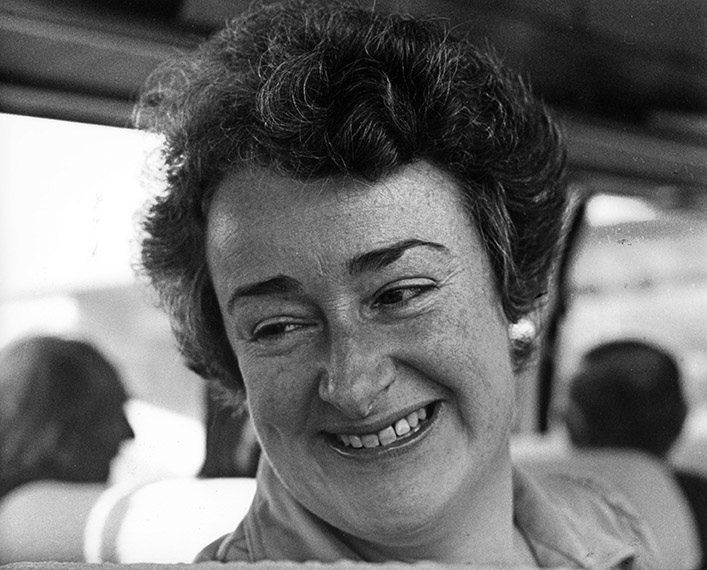
Here’s an article about the flautist Pat Lynden, who I studied with in London many years ago. Her way of teaching had a profound impact on the way I approach teaching. Here’s my blog post from a couple of years ago too, about unconditional teaching which was about her.
21st Century Learning. Reaction to Andy Burnham’s Speech
Andy Burnham, MP is the Labour party Shadow Education Secretary. (UK)
I would like to focus on some key points Andy Burnham made in his speech on 12th July entitled “21st Century Learning- What do young people need to succeed in the Modern World?”
He talked about the essential qualities young people will need to “navigate the modern world”, without going into much detail about what these qualities are. There is some great work being done at the moment with curriculum development particularly with ‘competency based’ or ‘skills based’ curricula such as the RSA ‘Opening Minds’ curriculum or, dare I say it, the excellent competency based framework I am developing with a wonderful team of educators at my current school. These competences become a foundation and a framework for all learning within school for all those experiencing it. The competencies we are focusing our curriculum on are :
Global Connector, Creator, Communicator, Collaborator, Explorer, Thinker and Knower of Self.
By focusing on these areas across the whole curriculum we give the learning community understanding of key skills they will need throughout their lives.
I would like to see schools take on a framework like this in primary school and continue into Middle (KS3) and High (KS4), making sure that all areas of the curriculum are focusing on these skills. One way that competencies can be explored is through another area which Andy Burnham focused on in his speech, work related learning.
Work related learning should not be seen as an option for the non-‘high flyers’ in schools, but rather for all students as a way of experiencing real life. Work experience would not dilute academic achievement (however you define this) but would enhance the curriculum they are experiencing. Work experience, in the past has often been a waste of time for students who complete two weeks work making coffee in an office and then return to their normal school routine. I would like to see students pursing an area of interest through work related opportunities and then continuing exploring when they get back to school through inquiry based, self driven projects and investigations. Schools will also need to focus on forming much closer links with local businesses and industries. A two way partnership where students realize their understanding of the key competencies outside the school environment.
Look further at excellent, proven schemes such as the Big Picture Organization’s Learning Though Internship programs for evidence of how these opportunities can transform student’s lives and help them to pursue passion.
Schools would need to invest in staffing for projects like this. Dedicated staff, whose sole responsibility is to forge links with local business and help provide opportunities within the school’s surrounding area.
Students exposed to a competency based curriculum, combined with real world learning will in my opinion be really connected to the 21st century world Burnham talks about. Real world learning relates to the child’s world and the world that they are in as well as preparing them for a world which we don’t exactly know will be like.
A competency based curriculum does not only focus on the child, but becomes a part of who every adult in the school is. Teachers need to be held accountable for quality teaching and the competencies apply to them too. This can be a very useful tool for professional evaluation and for deciding on professional development opportunities for staff.
I applaud Andy Burnham’s reference to creativity, the Arts and Sports, but am saddened that yet again the focus of support using the Arts and Sport as a means of helping students achieve more in their ‘core’ academic subjects. ALLsubjects or disciplines are core. They are all inextricably connected and this needs to be reflected in a quality curriculum.
I also agree with Burnham with his focus on reforming league tables and agree that a form of value added is important. Value added at the very least, looks at the progress of the individual child. But used as a tool for teacher and school evaluation, can lead to non-relevant standardized tests being use to gauge this value which is (or is not) being added. See article by Alfie Kohn on Value Added.
Andy Burnham also talks about how employability is not all we are preparing our students for. We want students to understand the world around them and the people around them, to understand themselves and to be critical in thought and caring in action.
Overall I very much liked what I read in the speech. I think he missed the opportunity to talk about creativity and design thinking combined with 21st century tools for learning in schools as a critical part of what students need to succeed in the modern world.
More about the Competency based curriculum being developed by my school soon.
Tedxkids Brussels Tomorrow!
Follow the Tedxkids Brussels event live all day on http://www.tedxkids.be
Great line up. Also follow students blog: www.stjohnstedxkids.wordpress.com and twitter @stjohnstedxkids
Tan Lee will be here.
Check out this blog.
Here’s a blog created by some students in our middle school to generate excitement for the Tedx event to be held at our school on June 1st
Please comment!
TedxKids@brussels

Getting Ready for Tedxkids at St. John’s International School. If you are around on June the first book a ticket!
Letter to Students from a Torn Teacher
“…………..When given opportunities for curiosity, fascination, and discovery, your insights amaze me. When I offer you occasions to be brave in thought and expression, I am impressed by your abilities. You are smart, and you know that you could never tell the world who you are with a No. 2 pencil within the tight constraints of an itty-bitty bubble….”
Click on link below for full letter:
Tedxkids at St. John’s International School
Great Event held at St. John’s International School, Belgium. June 1st. Don’t miss it.
http://www.facebook.com/tedxkidsbrussels?sk=wall#!/tedxkidsbrussels


